

We welcome you to the July edition of our Tax Newsletter. We hope that you find this informative. Please contact us if you wish to discuss in more detail any of the points highlighted.
MANDATORY PAYROLLING OF BENEFITS IN KIND: PHASED INTRODUCTION CONFIRMED

HMRC has confirmed that mandatory payrolling of benefits in kind (BiKs) will now be introduced in two phases, starting from 6 April 2027. This change will move the reporting of most benefits away from annual P11Ds and into real-time payroll, resulting in Income Tax and Class 1A National Insurance being reported through the payroll each pay period (e.g. weekly or monthly).
From April 2027, the first phase will apply to:
- Company cars and car fuel
- Vans and van fuel
- Employer-provided medical benefits.
From April 2028, most other benefits will be brought into the regime, although beneficial loans and employer-provided living accommodation will remain voluntary.
Under the new system, employers will report benefits through payroll each pay period using RTI, rather than reporting them after the year end. While this change will reduce the need for year-end forms, it increases the importance of getting payroll right throughout the year. Errors will be picked up more quickly, and corrections may need to be made in real-time.
There is still time to prepare. HMRC is continuing to work with software providers and will release further technical guidance during 2026, with final details expected ahead of the Autumn Budget.
Employers should start planning now. Review the benefits you currently provide and identify which will fall into the first phase. This is a significant shift in how benefits are taxed and reported. Preparing early will reduce disruption and make the transition much smoother.
Please get in touch if you would like help reviewing your benefits or preparing your payroll systems for these changes
MTD FOR INCOME TAX: 7 AUGUST DEADLINE IS NEAR
 Making Tax Digital (MTD) for Income Tax is now live. Most self-employed individuals and landlords who had turnover above £50,000 in 2024/25 were mandated into the regime from 6 April 2026.
Under MTD, you must keep digital records and submit updates to HMRC every quarter using compatible software. This is a significant change from the old system, where most reporting took place after the end of the tax year.
The first quarterly update for 2026/27 is due by 7 August 2026.
This deadline is approaching quickly, and it is important that records are complete and up to date well before then.
If we maintain your bookkeeping or prepare your submissions, you will need to send us your records in good time. Leaving this until the last minute creates unnecessary risk and may lead to delays or errors.
If you are unsure what information we need, or whether MTD applies to you, please get in touch as soon as possible.
GOV.UK CHAT – A NEW AI TOOL FOR TAX ANSWERS
 The government has introduced GOV.UK Chat, an Artificial Intelligence (AI) chatbot designed to help users find information more quickly. It allows people to ask questions in plain language and receive instant answers based on official GOV.UK guidance.
The chatbot can answer a range of tax-related questions, including:
- Understanding Income Tax
- Calculating Stamp Duty
- Planning for retirement and the State Pension
Since its soft launch in March 2026, thousands of users have already used the tool, with tax queries proving especially popular.
Caution is needed when using GOV.UK Chat – while it is useful, it has limits. It is important to understand that:
- It only uses published GOV.UK guidance
- It does not access HMRC manuals or deeper technical sources
- It is mainly suited to basic queries
This means it may not be reliable for more complex tax situations.
As with any AI tool, accuracy is not guaranteed. Responses can be incomplete or occasionally incorrect. These “hallucinations” can present wrong information as fact.
Treat GOV.UK Chat as a starting point, not a final answer. To reduce risk:
- Use it to locate guidance, not replace advice
- Read the full response, including caveats
- Make sure your question includes all relevant details
GOV.UK Chat may be helpful for quick answers but it is not a substitute for professional advice. If you are unsure, always check with us before acting.
VAT AND PUBLIC ELECTRIC VEHICLE CHARGING POINTS
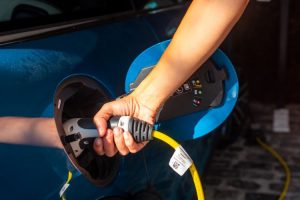 HMRC have published ‘Revenue and Customs Brief 4 (2026): VAT liability of supplies of electricity from public electric vehicle charge points’. This explains HMRC’s position following the First Tier Tribunal (FTT) decision in Charge My Street Ltd v HMRC, where the FTT decided in favour of Charge My Street Limited, finding that electric vehicle charging supplied at public charging stations qualified for VAT reduced rating. HMRC have applied for permission to appeal the FTT’s decision, and their view remains that charging electric vehicles at public charge points is standard-rated for VAT.
Supplies of fuel and power to domestic premises are subject to the reduced rate of VAT at 5%.
HMRC’s long-standing policy is that electric vehicle charge points located in public areas do not qualify as domestic premises and the standard rate of VAT applies to the supply of electricity at these locations.
The FTT ruling does not set a legal precedent, however, and HMRC’s policy means that there is VAT-rate disparity between electricity used to charge vehicles at home and electricity used to charge vehicles at public charging points.
ADVISORY FUEL RATES FOR COMPANY CARS
The table below sets out the HMRC advisory fuel rates from 1 June 2026. These are the suggested reimbursement rates for employees’ private mileage using their company car.
Where the employer does not pay for any fuel for the company car, these are the amounts that can be reimbursed in respect of business journeys without the amount being taxable on the employee.
|
Engine Size |
Petrol |
Diesel |
LPG |
|
1400cc or less |
14p (12p) |
|
11p (10p) |
|
1600cc or less |
|
15p (12p) |
|
|
1401cc to 2000cc |
17p (14p) |
|
13p (12p) |
|
1601 to 2000cc |
|
17p (13p) |
|
|
Over 2000cc |
26p (22p) |
23p (18p) |
21p (19p) |
Previous rates are shown in brackets.
You can also continue to use the previous rates for up to 1 month from the date the new rates apply.
Note that for hybrid cars, you must use the petrol or diesel rate.
For fully electric vehicles the rate is 7p (7p) per mile where the vehicle is charged at home. The rate applicable to vehicles charged using public facilities is 15p (15p) per mile.
Employees using their own cars
For employees using their own cars for business purposes, the Advisory Mileage Allowance Payment (AMAP) tax-free reimbursement rate was increased on 6 April 2026 to 55p per mile (plus 5p per passenger) for the first 10,000 business miles, reducing to 25p per mile thereafter. Note that for NIC purposes the employer can continue to reimburse at the 55p rate regardless of mileage as the 10,000 mile threshold does not apply.
Input VAT
Within the 55p/25p AMAP payments, the amounts in the above table represent the fuel element. The employer is able to reclaim 20/120 of the fuel amount as input VAT provided the claim is supported by a VAT invoice from the filling station. For a 1500cc diesel-engine car, 2.5 pence per mile can be reclaimed as input.
DIARY OF MAIN TAX EVENTS – July / August 2026
|
Date |
What’s due |
|
1 July 2026 |
Corporation Tax for year to 30/09/2025, unless quarterly instalments apply |
|
5 July 2026 |
Deadline to agree PAYE settlement agreements for 2025/26 |
|
6 July 2026 |
P11D, P11D(b) and Employment Related Securities returns due for 2025/26 |
|
19 July 2026 |
PAYE & NIC deductions, and CIS return and tax, for month to 05/07/2026 (due 22 July if you pay electronically) |
|
31 July 2026 |
Due date for the second self assessment payment on account for 2025/26 (if applicable) |
|
1 July 2026 |
Corporation Tax for year to 31/10/2025, unless quarterly instalments apply |
|
19 July 2026 |
PAYE & NIC deductions, and CIS return and tax, for month to 05/08/2026 (due 22 August if you pay electronically) |
As always, if you have any questions about any of the information in this news bulletin, please contact us for personalised advice.