
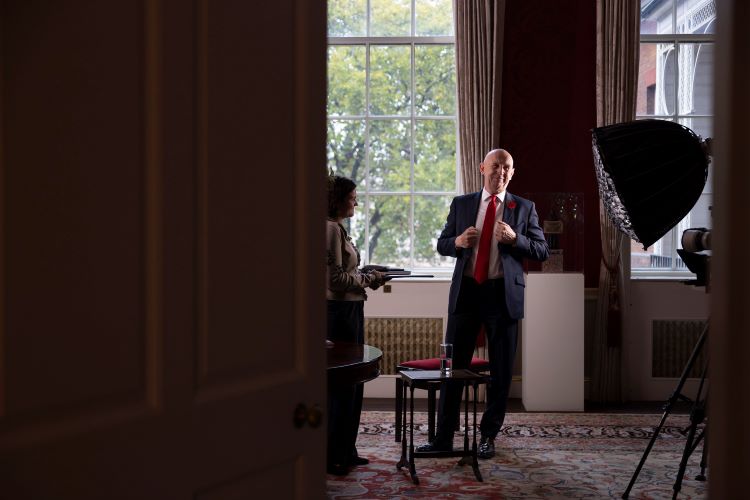

Chancellor John Healey delivered the Autumn Budget on 28 October 2026, setting out measures intended to ease cost pressures, support investment and provide greater economic stability. For business owners, company directors, employers and self-employed people, the announcements include opportunities to review investment plans, changes to certain tax allowances and new costs to factor into future budgets.
The headline Corporation Tax rates remain unchanged, but there are important developments elsewhere. These include a more generous main-rate first-year capital allowance, changes to the tax treatment of savings and property income from April 2027, a higher trading allowance, changes to business rates and new responsibilities for online marketplaces collecting VAT.
Some measures will not take effect immediately, while others require further legislation or detailed guidance. Business owners should therefore distinguish between confirmed policy announcements and arrangements whose technical details are still being developed.
Here are the main points to discuss with your accountant or professional adviser. The Government’s Budget 2026 announcement and HMRC’s overview of tax legislation and rates provide the official details.
- Corporation Tax: headline rates remain unchanged
The Budget maintains the Government’s commitment to a stable Corporation Tax environment. The main rate remains 25%, while the small profits rate remains 19%, subject to the existing rules governing which rate applies and how profits are calculated.
For many companies, this means the headline rate is not changing as a direct result of this Budget. However, the amount of tax payable can still be affected by capital allowances, reliefs, financing arrangements and the timing of expenditure.
The Budget also increases the Corporation Tax surcharge paid by banks from 3% to 6% for 15 months, beginning in January 2027 and ending on 31 March 2028. This is a targeted measure affecting the banking sector rather than ordinary trading companies.
Business owners should continue to prepare forecasts using their expected taxable profits and review any planned transactions or investments that could affect their tax position.
- Capital allowances: a potential incentive to invest
A significant announcement for businesses planning to buy qualifying equipment and machinery is the increase in the main-rate first-year allowance to 50% for qualifying expenditure incurred from 1 January 2027.
The main-rate writing-down allowance will also fall from 18% to 12%, taking effect from 1 April 2027 for Corporation Tax and 6 April 2027 for Income Tax.
For businesses planning substantial purchases, the change makes it important to review both the timing and tax treatment of investment. Not every asset will necessarily qualify for the same allowance, and businesses should confirm the rules before changing their purchasing plans.
Illustrative example: If a company spends £100,000 on qualifying equipment after the new 50% allowance takes effect, it could potentially claim a £50,000 first-year deduction under that allowance. The remaining expenditure would be dealt with under the applicable capital allowance rules. This is a deduction from taxable profits, not a £50,000 cash grant or tax saving.
Before committing to a major purchase, ask your accountant to confirm eligibility, the applicable dates and the likely effect on your company’s tax bill.
- Founders’ Relief and business exits
The Budget introduces a new Capital Gains Tax relief known as Founders’ Relief, aimed at founders and early investors who have made a significant long-term contribution to the development of high-growth, innovative UK companies. The Government has announced a 10% rate on qualifying lifetime gains of up to £10 million, but a technical consultation is being launched to develop the relief’s detailed rules.
This means business owners should not assume that every founder or shareholder will qualify. The eligibility criteria and final operation of the relief need to be checked as the policy develops.
Separately, the lifetime limit for Business Asset Disposal Relief will reduce from £1 million to £500,000 for qualifying disposals made on or after 6 April 2027.
Anyone considering a company sale, share transfer or succession plan should review the potential implications with a suitably qualified adviser. However, commercial considerations should remain central: a transaction should not be rushed simply to obtain a tax advantage.
- Savings, property income and the trading allowance
From 6 April 2027, Income Tax rates on savings income will rise to 24% at the basic rate, 44% at the higher rate and 49% at the additional rate. The same rates will apply to property income in England, Wales and Northern Ireland, subject to the relevant rules and devolved tax arrangements.
These changes may affect business owners who also receive interest or rental income personally. They do not mean that the general rates on ordinary employment income are increasing by the same amount.
The Budget also increases the trading allowance from £1,000 to £3,000 from 6 April 2027. The Self Assessment reporting threshold for trading income will rise to £3,000 as well. This may simplify reporting for people with modest side-business or miscellaneous trading income, although the rules and individual circumstances still matter.
Keep records of different income sources and ask your accountant to assess the overall effect rather than considering each tax change in isolation.
- Business rates: support for eligible high-street businesses
The Budget announces changes intended to reduce business rates bills for eligible retail, hospitality and leisure premises in England. The threshold for paying business rates is being increased from £12,000 to £18,000, with the Government stating that around half of shops, restaurants and gyms will pay no business rates as a result of the changes.
The actual benefit will depend on the property, its rateable value and the applicable relief rules. The arrangements also differ across the UK, so businesses in Scotland, Wales and Northern Ireland should check the position in their own nation.
If your business occupies commercial premises, review your current bill and monitor the implementation guidance. Do not assume that every property will qualify for the same reduction.
- Wages, mileage and operating costs
The National Living Wage will rise by 3.9% to £13.21 an hour from 1 April 2027. Employers should update payroll forecasts and consider the effect on pay structures, overtime, recruitment budgets and associated employment costs.
There is also a change for employees and self-employed people who use their own vehicles for business. From 6 April 2027, approved mileage allowance payments and simplified mileage rates for business mileage above 10,000 miles will increase from 25p to 35p per mile. Employers should review expense policies and systems before the new rates take effect.
The Budget also extends the 5p fuel duty cut for another six months and delays the planned Retail Prices Index increase until 1 July 2027. These measures may help some businesses with transport costs, although the actual impact will depend on fuel consumption, vehicle use and other operating expenses.
- VAT: online marketplaces and electronic invoicing
From October 2027, VAT online marketplace liability rules will be extended to qualifying sales by UK businesses. Online marketplaces will become responsible for collecting VAT on relevant sales by UK VAT-registered businesses and other UK businesses meeting the applicable sales threshold per platform.
The rules exclude certain transactions, including personal sales, second-hand goods and business-to-business transactions. Further details will be implemented through secondary legislation, so affected sellers should monitor HMRC guidance and review how their marketplace arrangements operate.
The Budget also sets out plans to enable mandatory electronic VAT invoicing from April 2029. The Government will consult on digital reporting alongside e-invoicing, with the consultation running until 20 January 2027.
Businesses should not wait until 2029 to think about their records. Reviewing accounting systems, invoice processes and the quality of financial data now can make future changes easier to manage.
- What should businesses do now?
The most useful next step is to translate the Budget announcements into a practical action plan.
- Review investment plans: Check whether planned equipment purchases could qualify for the new first-year allowance and confirm the relevant dates.
- Update financial forecasts: Factor in wage increases and assess any potential changes to business rates, fuel costs and personal income tax.
- Review business exit plans: Discuss Founders’ Relief and the reduced Business Asset Disposal Relief limit with an adviser before making decisions.
- Check personal income: Business owners receiving rental or savings income should consider the changes scheduled for April 2027.
- Update payroll and expenses: Prepare for the National Living Wage increase and review mileage reimbursement procedures.
- Review VAT systems: Online sellers should monitor the marketplace rules, while all VAT-registered businesses should follow developments on electronic invoicing.
The bottom line
The Autumn Budget 2026 offers targeted support and potential investment incentives, but it also introduces tax changes that need forward planning. The impact will differ according to a business’s size, sector, ownership, income sources and investment plans.
Rather than reacting to individual headlines, business owners should review the Budget as part of their wider financial planning. An early discussion with an accountant can help establish which measures apply, when action is needed and how to make informed decisions about investment, tax and growth.
Note: The article above summarises the announcements available on Budget day. Tax legislation and technical guidance may develop as the Finance Bill progresses.